

Working Gently with Stored Emotion and Trauma in the PELVIS.
Healing doesn’t require force or reliving the past. Through gentle movement, mindful awareness, and nervous-system safety, the body can soften and reorganise in its own time.
The body remembers what the mind may forget.
The pelvis, our centre of gravity and grounding, can hold patterns of protection shaped by past experience.
Encountering the patterns, stored trauma, blocked energies, and then gently healing, begins with presence.
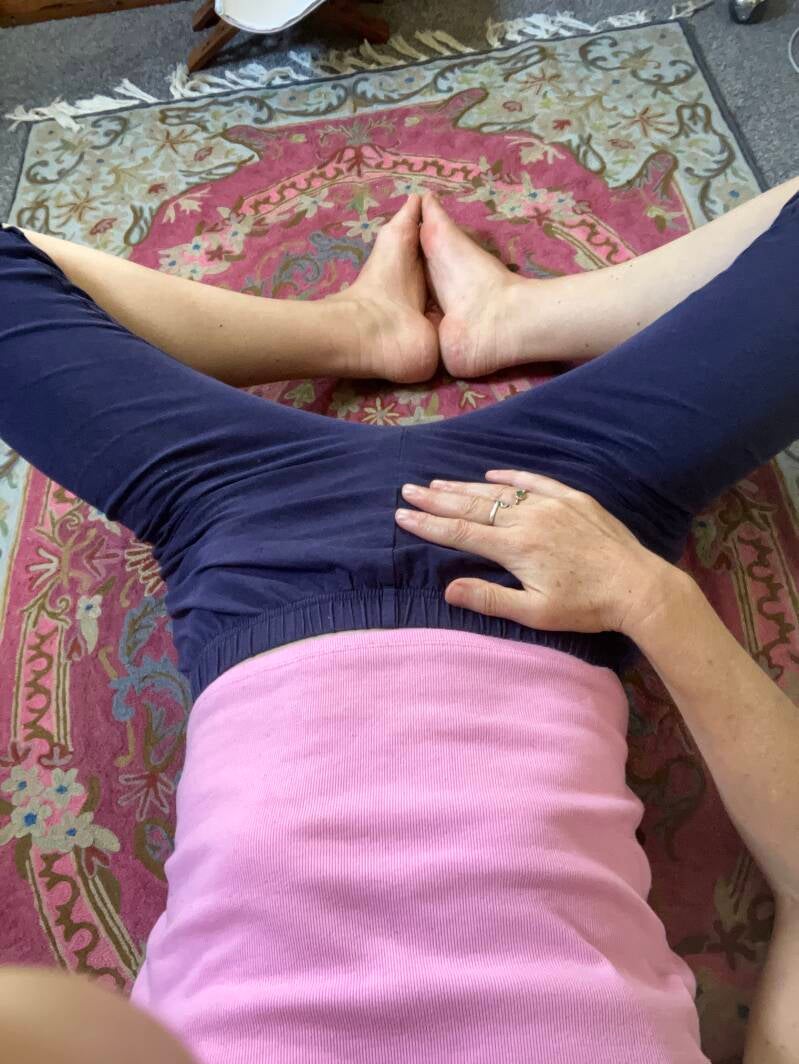
The pelvis is often described as the body’s centre of gravity, structurally, energetically, and emotionally. Across somatic psychology, trauma research, yoga therapy, and bodywork traditions, there is a growing recognition that shocking, threatening, or painful experiences may not fully process at the time they occur and instead may be held not only in the mind, but in the body. The pelvis, with its dense network of muscles, fascia, nerves, and organs, is one place where emotional residue and survival responses may linger.
This idea can sound mysterious or metaphorical, but modern neuroscience and physiology increasingly support the notion that the body remembers. Understanding how this works and how to work with it gently, can open pathways to healing that do not rely solely on talking or cognitive insight.
Trauma Beyond the Story
Trauma is not defined only by what happened, but by what happened inside us when we lacked the capacity, safety, or support to process an experience. When the nervous system perceives threat, it prioritises survival over reflection. Muscles brace, breath changes, and attention narrows. If the system does not later complete this stress response through movement, expression, or regulation, then those patterns can persist.
From a neuroscience perspective, this involves the autonomic nervous system, particularly the balance between sympathetic (mobilisation) and parasympathetic (rest and repair) states. Trauma can leave the nervous system biased toward hypervigilance or shutdown. Because the pelvis plays a central role in posture, locomotion, elimination, and reproduction, it is deeply linked to survival, safety, and boundaries. Chronic holding or numbness here is not a flaw, it is an intelligent adaptation.
Fascia, Sensation, and Memory
One reason the pelvis is so significant lies in fascia: the connective tissue network that wraps muscles, organs, and bones. Fascia is richly innervated with sensory receptors and responds to stress by thickening or losing elasticity. Research suggests fascia may play a role in proprioception (our sense of self in space) and interoception (our perception of internal states). Also our pelvis houses some very vital organs, and it’s flexion/contraction via the psoas muscle group, pulls the torso-body into a self-protective posture.
The Psoas and Pelvic Health
The psoas muscle group, a deep link between the spine and pelvis, plays a subtle but powerful role in pelvic health. It can be especially sensitive to experiences of childbirth, menstrual cycles, or the physical and emotional demands of caregiving. During times of stress or exhaustion, the psoas may tighten or hold, reflecting the body’s instinctive need to protect itself. This can contribute to tension, fatigue, or a sense of disconnection in the pelvis and lower back.
Because the psoas attaches to the lumbar spine and the front of the pelvis, chronic tension can also influence the position and function of nearby organs, such as the bladder, reproductive organs, and intestines in people of any gender. Rather than forcing release, the psoas responds best to gentle movement, supportive positioning, and mindful awareness, allowing it to gradually sense safety and ease.
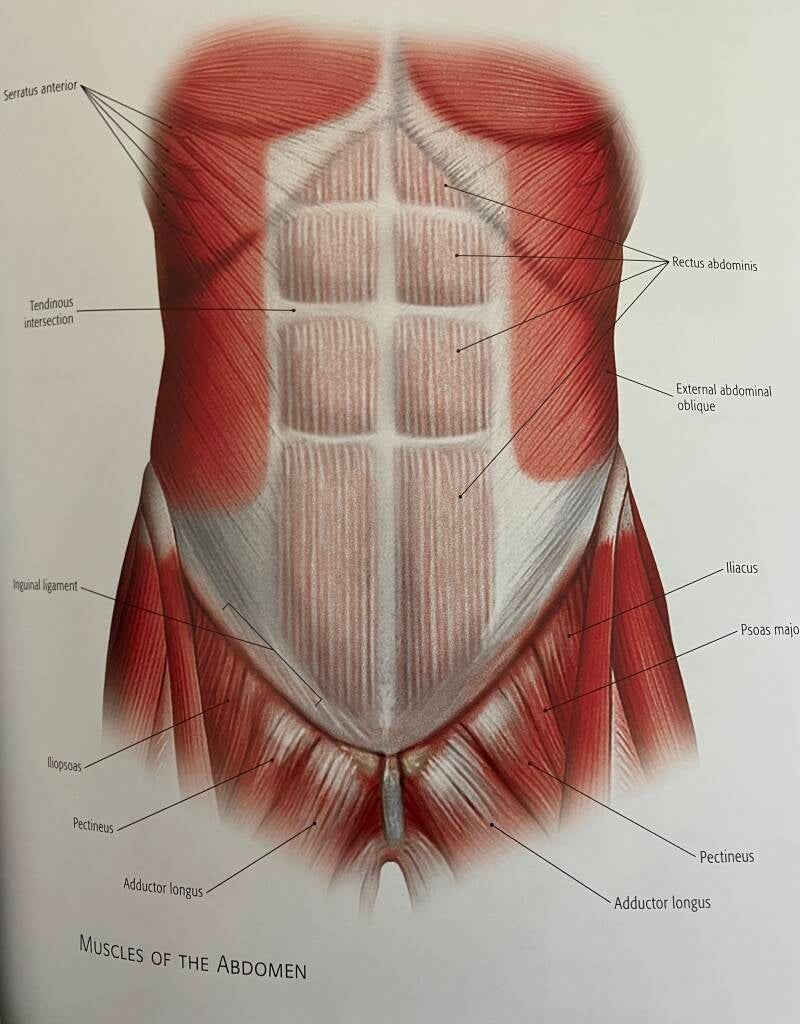
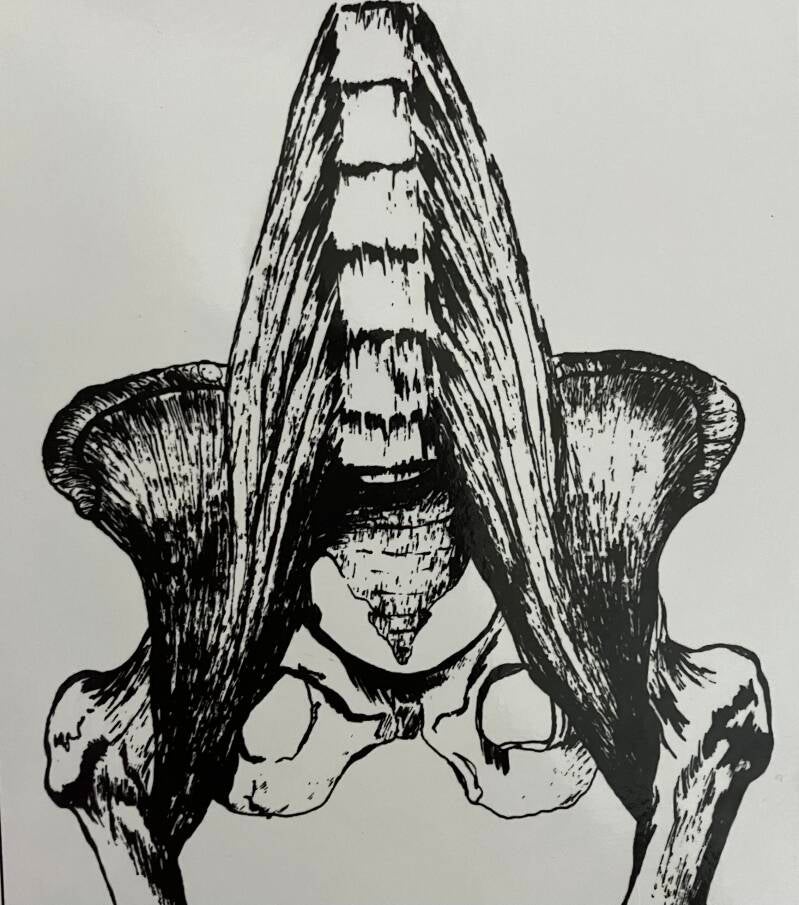

Trauma Release Through Gentle Movement
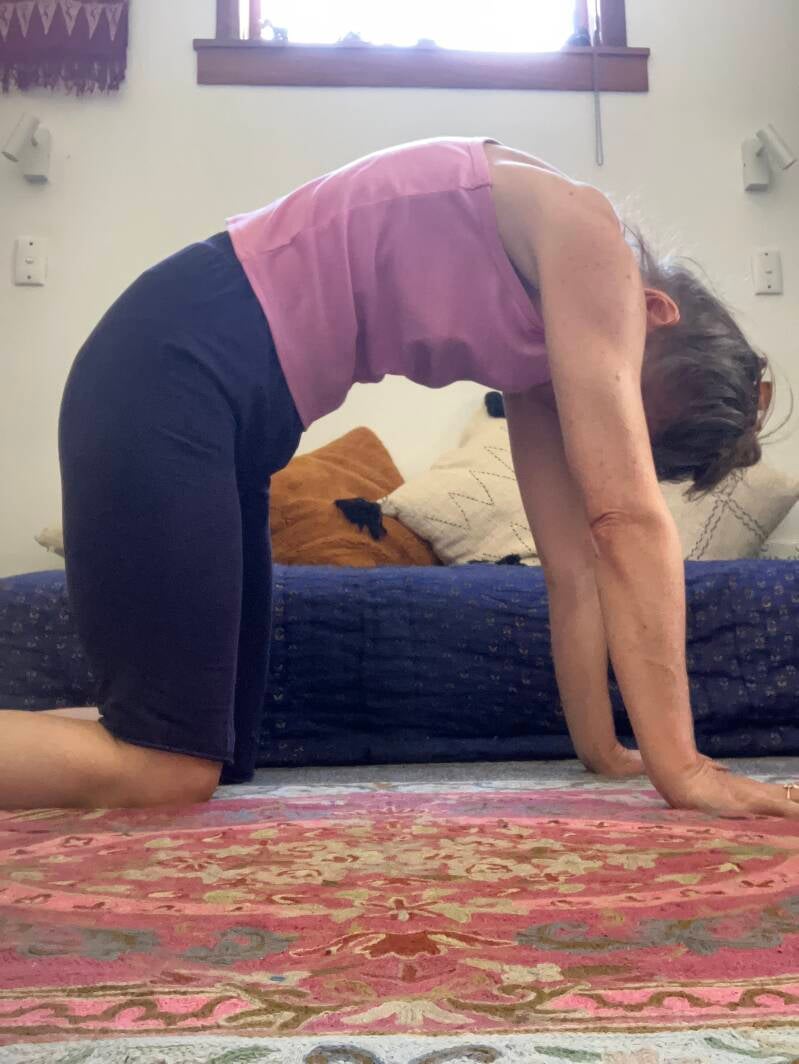
Trauma-informed approaches such as Embodied Processing, Yoga, and other somatic practices focus on restoring choice, sensation, and agency in the body. Rather than forcing release or pushing through discomfort, these methods emphasise slow, mindful movement and titration to allow small, manageable doses of sensation and organic change.
Gentle pelvic tilts, rocking, spirals, or supported floor-based movements can help the nervous system renegotiate safety. When movement is paired with awareness and the option to stop at any time, the brain begins to update its predictions: this sensation is tolerable; I am here now.
From a neuroplasticity standpoint, this is crucial.
Healing does not come from reliving trauma, but from creating new experiences of regulation and presence that gradually reshape neural pathways.
Myofascial Release and Listening to the Body
Myofascial release using sustained, gentle pressure or stretching can be another way to engage the pelvis with curiosity rather than control. When approached slowly, this work may allow held tissues to soften, emotions to process, and sensation to re-emerge.
What matters most is not technique, but relationship. Rather than “fixing” the body, myofascial work invites listening. Sensations may arise such as warmth, emotion, images, or simply a sense of space. None of these need to be analysed.
The body does not require interpretation to heal, it requires permission.
Mindfulness and Non-Dual Awareness
Mindfulness plays a powerful role in this process, especially when understood beyond self-improvement or symptom management. At its core, mindfulness is the capacity to be with experience as it is, without adding judgment, resistance, or a demand for change.
From a non-dual perspective, sensations, emotions, and thoughts are not problems to solve but expressions appearing within awareness. When pelvic sensations are met with gentle attention rather than fear or identification (“something is wrong with me”), the nervous system often settles naturally.
Neuroscience supports this. Mindful awareness activates prefrontal regions associated with regulation and reduces excessive limbic reactivity, but beyond these mechanisms, there is a deeper shift, a recognition that we are not broken, and that healing is not about becoming someone else, but about allowing what is already here to move and reorganise.



Integration, Not Forcing Release
It’s important to acknowledge that not everyone will feel dramatic releases and that is okay. Healing is often subtle, more ease in walking, a fuller breath, a sense of grounded-ness, or increased emotional range. Trauma-informed approaches respect pacing and individuality.
Working with stored emotion in the pelvis is not about digging up the past or chasing catharsis, it is about restoring communication between body and awareness, between sensation and safety.

A Gentle Closing
The pelvis holds life, movement, and stability. It also holds traces of past experience, and this need not be a burden, but rather, evidence of resilience. Through gentle movement, mindful touch, and compassionate awareness, the body can be reminded of what it already knows… how to return to balance, how to feel, and how to rest.
Healing, in this sense, is less about doing, and more about listening, allowing the intelligence of the nervous system and the spaciousness of awareness to meet, right where we are.
This blog and my approach is informed by contemporary neuroscience, trauma research, somatic psychology, and contemplative traditions. Healing is not about forcing release, but about restoring safety, awareness, and choice.
Recommended reading
Trauma, the Body & the Nervous System
- Van der Kolk, B. The Body Keeps the Score.
A foundational text on how trauma is stored in the body and nervous system, integrating neuroscience, somatic therapy, and clinical practice. - Levine, P. Waking the Tiger: Healing Trauma.
Introduces the idea that trauma is an incomplete physiological response rather than the event itself. - Porges, S. The Polyvagal Theory.
Explores how the autonomic nervous system shapes safety, connection, and trauma responses and the relevance of pelvic holding and regulation.
Fascia, Myofascial Release & Embodiment
- Schleip, R., Findley, T., Chaitow, L., & Huijing, P. Fascia: The Tensional Network of the Human Body.
Research on fascia as a sensory, communicative tissue involved in posture, emotion, and proprioception. - Myers, T. Anatomy Trains.
Explores myofascial lines and how tension patterns relate to movement, stability, and emotional holding.
Mindfulness, Interoception & Neuroscience
- Siegel, D. The Mindful Therapist.
Connects mindfulness, brain integration, and nervous system regulation in trauma healing. - Craig, A. D. “How do you feel? Interoception and the sense of the physiological condition of the body.” https://www.overcominghateportal.org/uploads/5/4/1/5/5415260/conb_craig_2003.pdf
A key paper on interoception and how sensing the body supports emotional awareness and regulation.
Non-Dual & Contemplative Perspective
- Kabat-Zinn, J. Wherever You Go, There You Are.
A gentle, accessible bridge between mindfulness, embodiment, and present-moment awareness.
Pelvic Health & Trauma
- Herman, J. Trauma and Recovery.
Foundational work on trauma, safety, and embodiment, widely referenced in women’s trauma care. - Koch, L. The Psoas Book; Stalking the Wild Psoas 2 books which explore the psoas muscle as a core element of embodiment, trauma response, and nervous system regulation.
- Rosenbaum, T. Y. (2011). “Pelvic Floor Involvement in Male and Female Sexual Dysfunction and the Role of Pelvic Floor Rehabilitation in Treatment.” https://www.foundationalconcepts.com/wp-content/uploads/2016/07/rosenbaum_pelvic-floor-involvement-in-male-and-female-sexual-dysfunction.pdf
This paper highlights the interaction between emotional experience, nervous system response, and pelvic floor health.
Women, Stress & the Nervous System
- Northrup, C. Women’s Bodies, Women’s Wisdom.
Integrative perspective on emotional and physiological health in women.
Make contact with me if you’re curious to experience trauma release techniques and a holistic counselling approach which includes the Embodied Processing method (TCFH). I have new spaces available in 2026, for online or in-person session. I offer a sliding scale of fees and am happy to discuss how we can find a way together, to support your needs.
I am also offering a live call on the topic in this blog for the students and community at TCFH (The Centre for Healing).
Add comment
Comments